
Webinar statistics show that this digital marketing channel has evolved from a niche tactic to one of the most powerful tools for lead generation, brand building, and audience engagement in 2025.
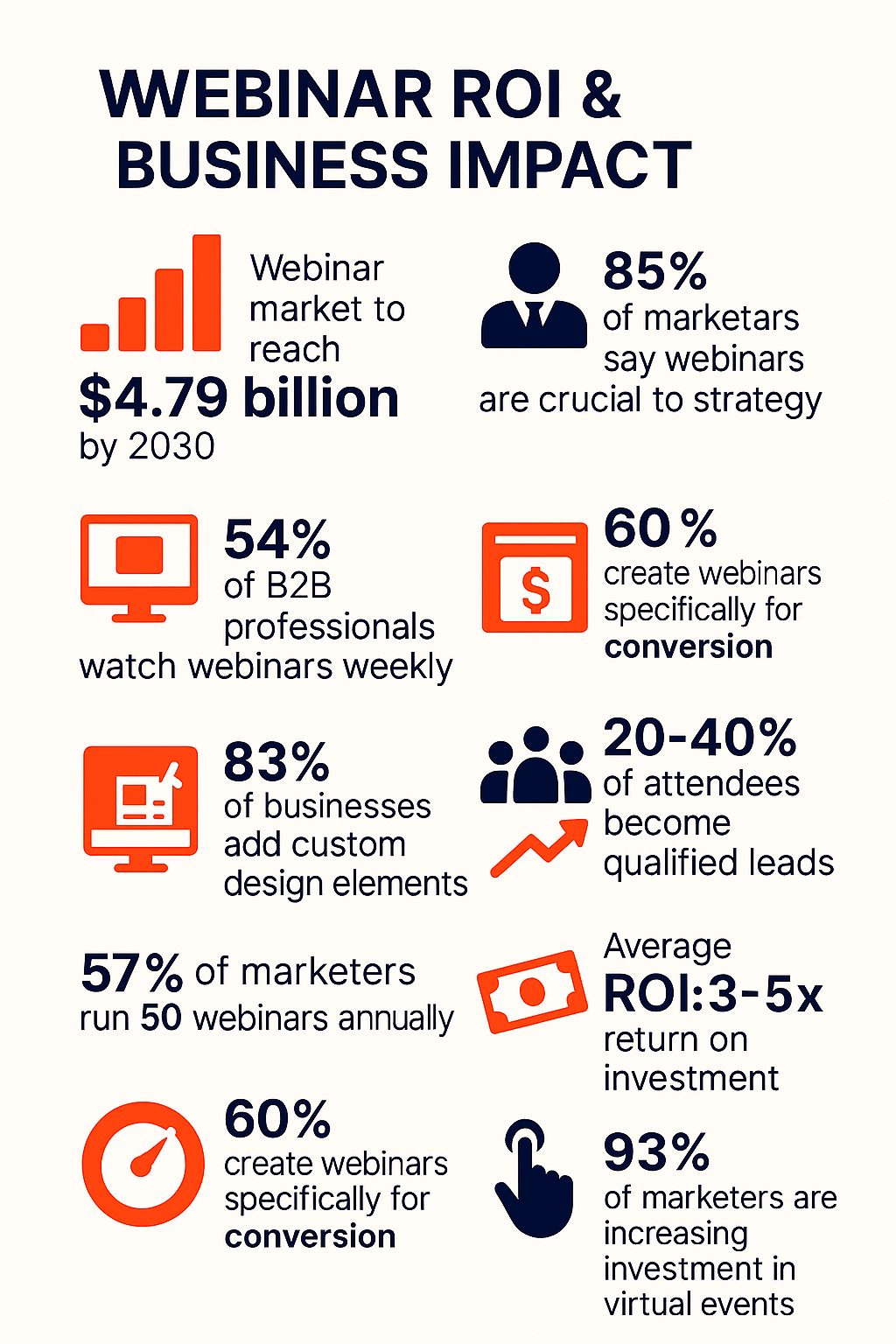
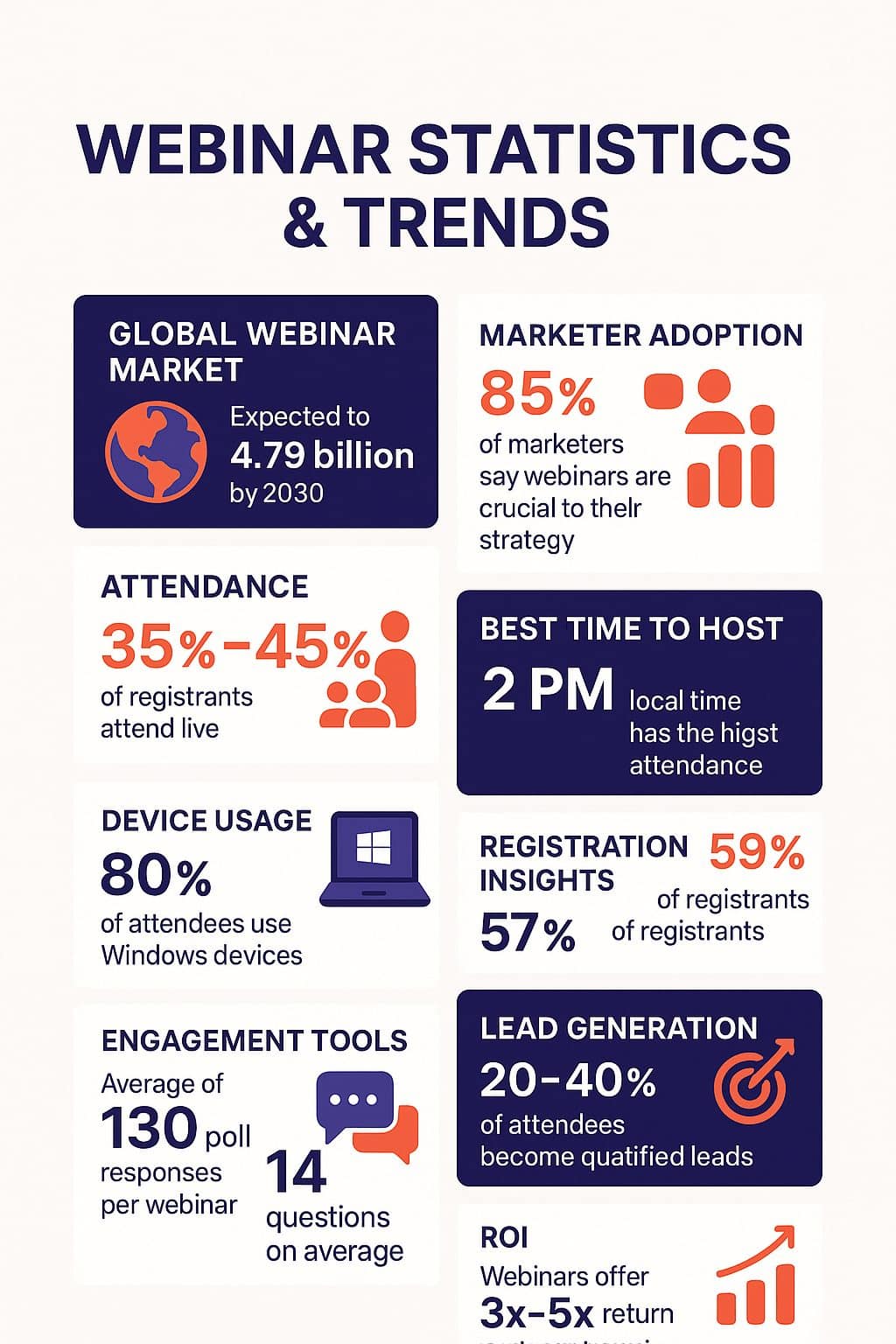
The global webinar market is expected to reach $4.79 billion by 2030, growing steadily year after year.
With 85% of marketers reporting webinars as crucial to their marketing strategy and average attendance rates between 35% and 45%, webinars are surviving and thriving in today’s crowded digital landscape.
Whether you’re new to hosting webinars or looking to optimize your current strategy, these 29 data-backed webinar statistics will give you a clear picture of what’s working in 2025 and how to plan your next successful session.
What Are Webinars & Why Are They Important In 2025?
A webinar is a live video presentation hosted online. The term “webinar” is a blend of “web” and “seminar“.
Typically, you’ll need webinar software to create a virtual conference room and generate a shareable link for attendees.
Popular webinar platforms include WebinarJam, GoToWebinar, EverWebinar, and Zoom.
Webinars come in various formats:
- Live Webinars: Real-time presentations where hosts and attendees interact directly.
- On-Demand Webinars: Pre-recorded sessions that attendees can watch at their convenience.
- Automated Webinars: Pre-recorded webinars that simulate a live experience, often with scheduled playbacks.
These formats cater to different audience needs and scheduling preferences.
Webinars are highly interactive and engaging, making them suitable for various purposes:
- Marketing & Sales: Showcasing products or services to potential customers.
- Training & Education: Providing instruction or information to employees or students.
- Internal Communications: Facilitating meetings and updates within organizations.
The flexibility of webinars allows hosts to share their screens, present slides, conduct polls, and engage in Q&A sessions, enhancing the overall experience.
In 2025, webinars will continue to be vital tools for businesses and educators alike, offering a dynamic platform for communication and learning.
Key Webinar Attendance Statistics For 2025
Webinars have become a staple in digital communication, and the numbers speak volumes.
1. Average Attendance Rates
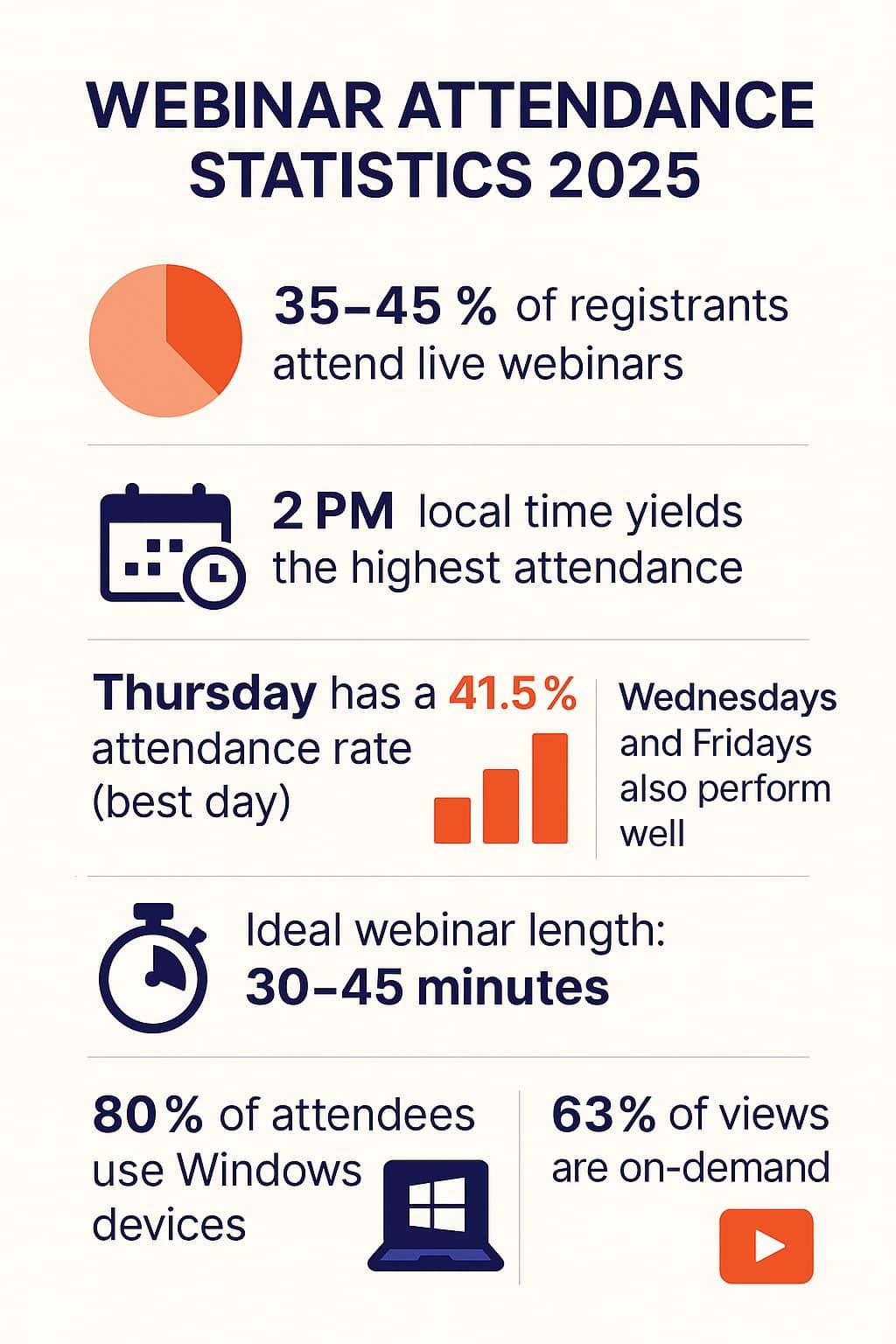
Typically, 40% to 50% of webinar registrants attend the live session. This rate can vary based on factors like topic relevance, promotion strategies, and timing.
2. Optimal Timing
Hosting webinars at 2 PM local time tends to yield the highest attendance rates, followed closely by 12 PM and 11 AM.
3. Best Days To Host
Thursdays see the highest live attendance rates at around 41.5%, with Wednesdays and Fridays also performing well.
4. Ideal Webinar Length
Webinars lasting between 30 to 45 minutes tend to have higher engagement and attendance rates compared to longer sessions.
5. Industry Participation
The software and technology sector leads in hosting webinars, accounting for 29% of all webinars, followed by financial services at 14%.
6. Device Preferences
A significant majority of attendees, about 80%, join webinars using devices running on Windows OS, indicating a preference for desktop or laptop participation.
These statistics highlight the importance of strategic planning in webinar hosting, from choosing the right time and day to understanding your audience’s preferences.
Webinar Registration Statistics & Best Practices
Understanding registration patterns is crucial for maximizing attendance and engagement in your webinars.
7. Average Attendance Rate
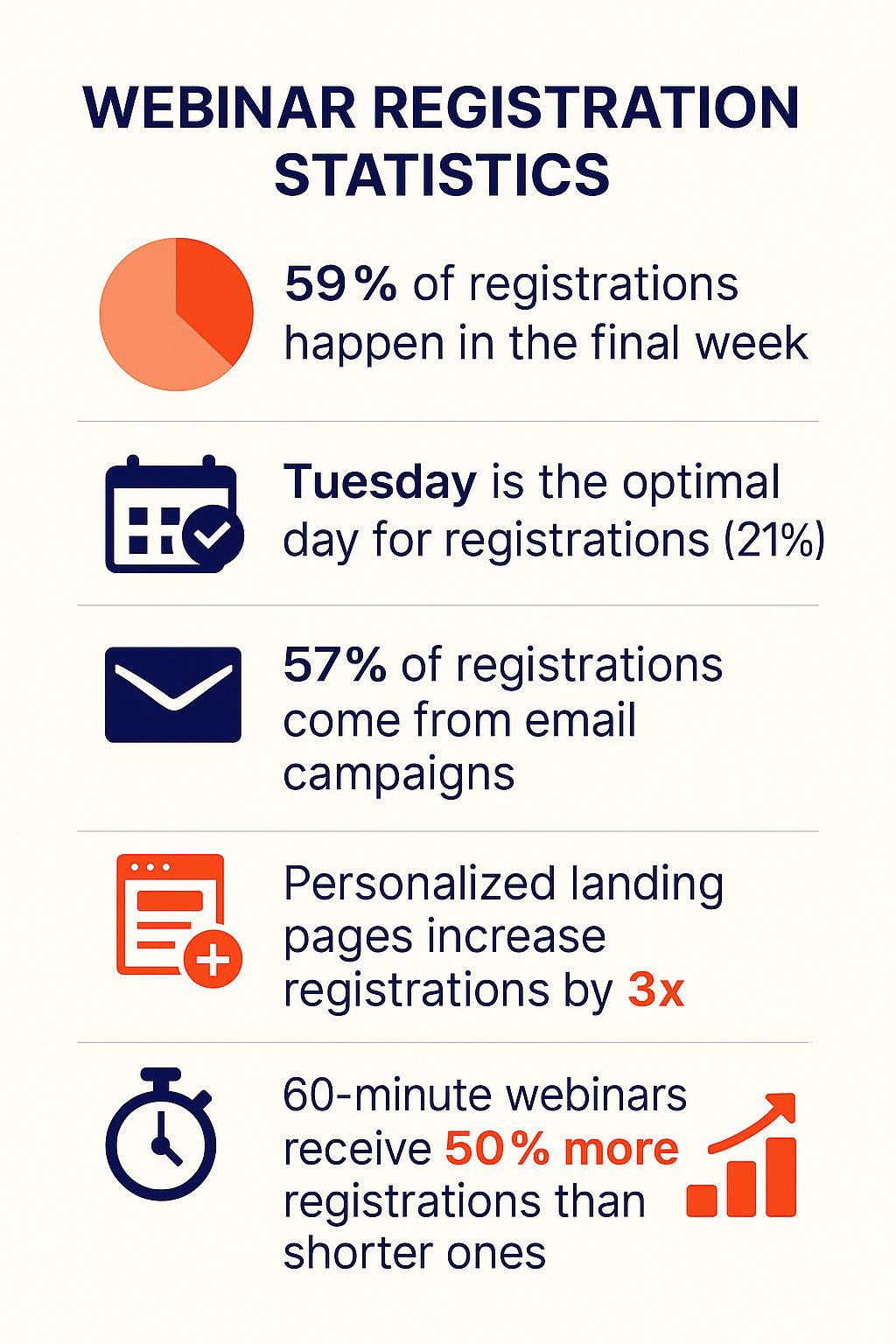
In 2025, the average attendance rate for webinars hovers between 35% and 45%, indicating that nearly half of those who register attend the live session.
8. Optimal Days For Registration
Research indicates that most webinar registrations occur on Tuesdays, accounting for approximately 21% of total sign-ups.
9. Timing of Registrations
A significant portion of registrations, about 59%, happen within the last seven days leading up to the webinar, emphasizing the importance of timely reminders and promotions.
10. On-Demand Viewing
Approximately 63% of webinar views are on-demand, highlighting the value of providing recordings for those unable to attend live sessions.
11. Impact of Email Marketing
Email remains a powerful tool for driving registrations, with 57% of webinar registrations originating from email campaigns.
These insights underscore the importance of strategic planning in your webinar promotion efforts.
By focusing on optimal registration days, leveraging email marketing, and offering on-demand content, you can enhance participation and engagement in your webinars.
Webinar Engagement Statistics: How To Keep Your Audience Active
Engaging your audience is crucial for the success of any webinar. Let’s delve into some key statistics that highlight the importance of audience interaction and strategies to enhance engagement.
12. Interactive Features Drive Engagement
Webinars incorporating interactive elements such as polls, Q&A sessions, and surveys see higher engagement rates.
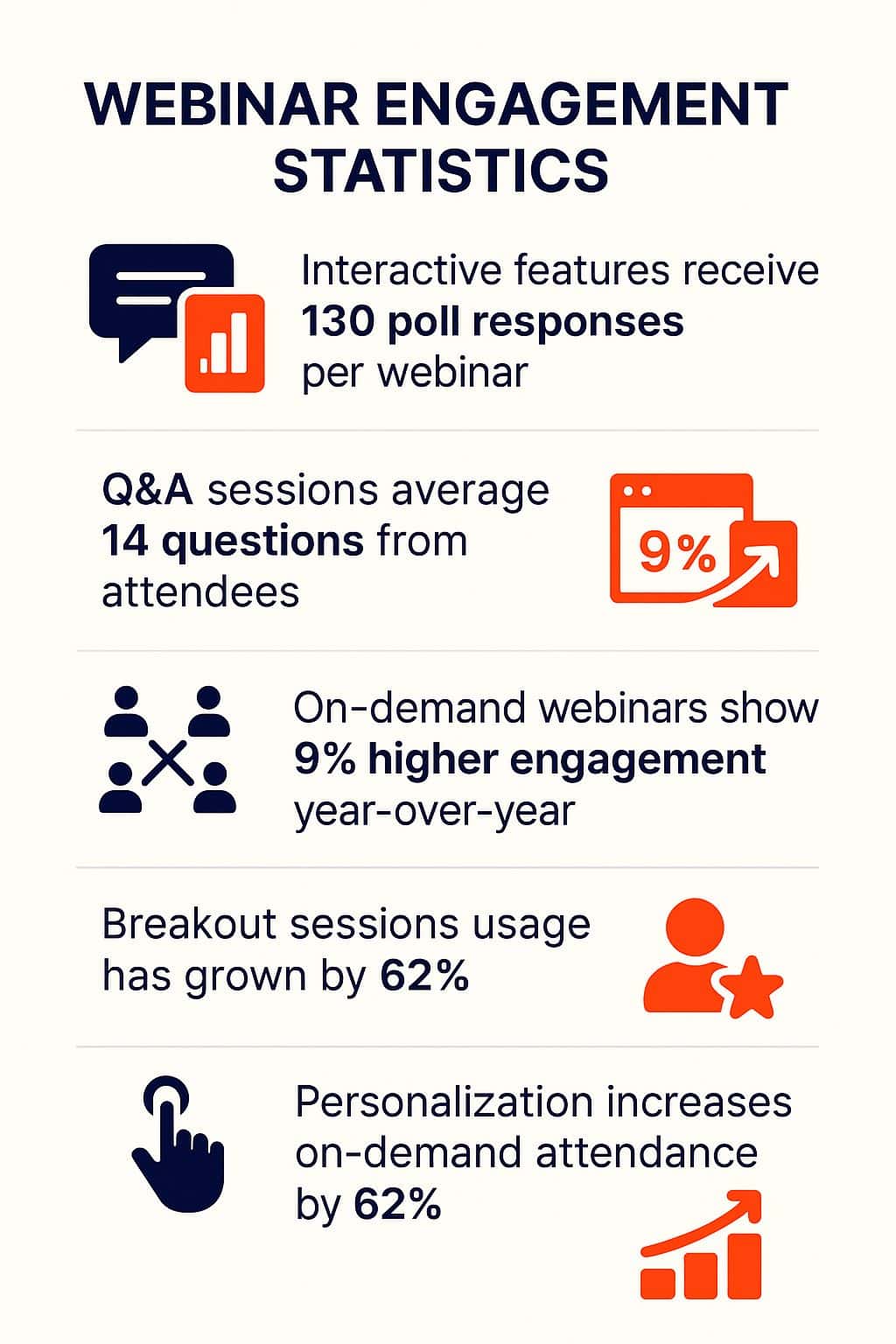
For instance, polls receive an average of 130 responses per webinar, while Q&A sessions average 14 questions from attendees.
13. On-Demand Webinars See Increased Engagement
On-demand webinars have experienced a 9% year-over-year increase in engagement, surpassing live formats.
This trend underscores the importance of providing accessible content that audiences can engage with at their convenience.
14. Breakout Sessions Enhance Participation
The use of breakout sessions in webinars has grown by 69%, facilitating focused discussions and deeper engagement among smaller groups of attendees.
15. Personalization Boosts Performance
Personalized webinar experiences lead to significant improvements in performance metrics.
For example, personalized landing pages have seen a 3x increase in registrations, and the average number of on-demand attendees rose by 62% when personalization was employed.
16. Conversion Rates From Webinars
On average, companies see 20% to 40% of webinar attendees entering the sales pipeline as qualified leads. Delivering valuable content and having a solid follow-up strategy are key to nurturing these attendees toward conversion.
These statistics emphasize the importance of interactive features, on-demand accessibility, breakout sessions, personalization, and strategic follow-up in enhancing webinar engagement and effectiveness.
Webinar Performance & ROI Metrics
Webinar performance metrics are essential for understanding how successful your webinars are in terms of reach, engagement, and conversion.
Let’s dive into the latest data on these key metrics and how they can guide your webinar strategy.
17. Average Webinar Duration
Webinars generally last between 45 minutes to 1 hour, with 60 minutes being the ideal duration for maintaining engagement.
Recent reports show that webinars lasting around 60 minutes receive 50% more registrations than shorter ones.
18. Attendance Rates and Trends
On average, 40-50% of people who register for webinars attend them live. However, repurposing webinars as on-demand content increases viewership by 35-40%, offering greater value and extended reach.
19. Webinar Conversion Rates
Conversion rates can vary widely from 5% to 30%, depending on the targeted nature of the audience and the value provided.
Offering follow-up incentives or lead magnets after the webinar can push conversion rates closer to 30%.
20. Lead Generation through Webinars
Webinars are an exceptional lead generation tool, with 73% of marketers considering them among the most effective methods for generating high-quality leads.
In fact, 58% of companies report that webinars generate more leads than other types of content.
21. Cost of Webinars & ROI
On average, webinars can cost anywhere from $3,000 to $10,000, covering platform fees, promotions, and content creation.
However, organizations often see a return on investment (ROI) of 3x to 5x, particularly when they focus on audience nurturing and post-event conversions.
By focusing on key metrics like duration, attendance, conversions, lead generation, and ROI, companies can continuously refine their webinar strategies to drive greater success.
B2B Webinar Marketing Statistics
Webinars have become a cornerstone of B2B marketing strategies, with compelling data demonstrating their effectiveness for audience engagement and business growth in 2025.
22. B2B Professionals Watch Webinars
More than 54% of B2B professionals watch the webinar at least once a week. It is their favorite content format, and they try to learn the latest industry trends and gain knowledge.
If anyone missed the live webinar, they can order the on-demand webinar.
23. Webinar Customization Is Vital
More than 83% of businesses add custom design elements to their webinar. Personalization plays a great role and building a connection with your audience. You can add a logo, icons, and background from the webinar software console.
24. Marketers Host Webinars Frequently
57% of marketers run 50 webinars per year. Webinars have become a new home in the world of marketing. Marketers use this robust medium for engaging audiences and generating qualified leads.
Experts are focusing on the budgets for running more webinars in the coming years. You can share your skills and knowledge with the audience and build trust. Try to learn from past webinars and provide the best input from your end.
25. Webinars as Conversion Tools
60% of businesses create their webinar to convert viewers into paying customers. A webinar sales funnel encourages people to buy your product or service.
Generally, they add countdown timers or limitations on the number of products available. It creates an urgency in the webinar and encourages viewers to buy.
Don’t stop building relationships with your customers after the webinar. You can send a thank-you email with a sales pitch to push them deeper into the sales funnel.
26. Webinar Revenue Potential
You Can Make $11,286 or More From One Webinar
Scott Britton, an online educator, made $11,286 from a single seminar for his online course on Udemy.
Webinars are one of the effective ways to drive in new leads and more conversions. Don’t just take it as a milestone.
The conversion percentage can depend on various factors like industry, the host’s pitching ability, the effect of your product/service on the audience, etc.
27. Growing Investment In Virtual Events
93% of event marketing professionals want to invest in virtual events shortly. The global pandemic and social distancing behavior are forcing people to join virtual events and webinars.
It will help marketers to spend less on physical events and generate more leads.
Webinar Software & Technology Statistics
The technical foundation of your webinar can significantly impact audience experience and engagement.
Understanding the latest trends in browser preferences and interactive tools helps optimize your webinar technology strategy for 2025.
28. Preferred Browsers For Webinars
More than 45% of users prefer the Microsoft Edge browser for watching webinars. It is quite surprising because the most used general browser is Google Chrome.
29. Interactive Tool Usage In Webinars
According to a study, 33% of webinar hosts use interactive tools in a webinar. Keeping your audience engaged during the webinar is the best practice.
Use tools for adding tests, surveys, or polls to better engage your participants. Solve questions and receive feedback on your webinar using this interactive tool.
Webinar Strategy: Key Takeaways for 2025
Webinars are no longer optional; they are a critical tool in the modern marketing and communications toolbox.
From lead generation and customer engagement to education and training, webinars offer a scalable, high-impact format with proven ROI.
As the numbers show:
- Attendees want more engagement.
- Hosts need to promote earlier and smarter.
- Email marketing still reigns supreme.
- Customization and interactivity can significantly boost performance.
Whether you’re looking to build trust, convert leads, or train teams, these statistics can help guide your webinar strategy in 2025 and beyond.
References
- Statista: Global Webinar Market Size Forecast (2020–2030)
- ON24 Webinar Benchmarks Report: Webinar Attendance, Engagement, and Conversion Trends
- GoToWebinar Benchmark Report: Best Days, Times, and Formats for Webinars
- Demio Webinar Engagement Guide: Stats on Q&A, Polls, and Breakout Rooms
- WebinarCare: Best Webinar Software & Browser Compatibility Stats 2025
- Content Marketing Institute: B2B Content Marketing Benchmarks
- MarketingProfs: Email-Driven Webinar Registrations & Conversion Insights
- Wyzowl Video Marketing Report: Video & Webinar ROI Stats
- Bizzabo Event Marketing Report: Virtual Events & Webinar Investments
